The journal
Should I get an A4 or A5 sketchbook?
how to choose a sketchbook, practical guide to A4 vs A5 by use case, paper weight and portability.
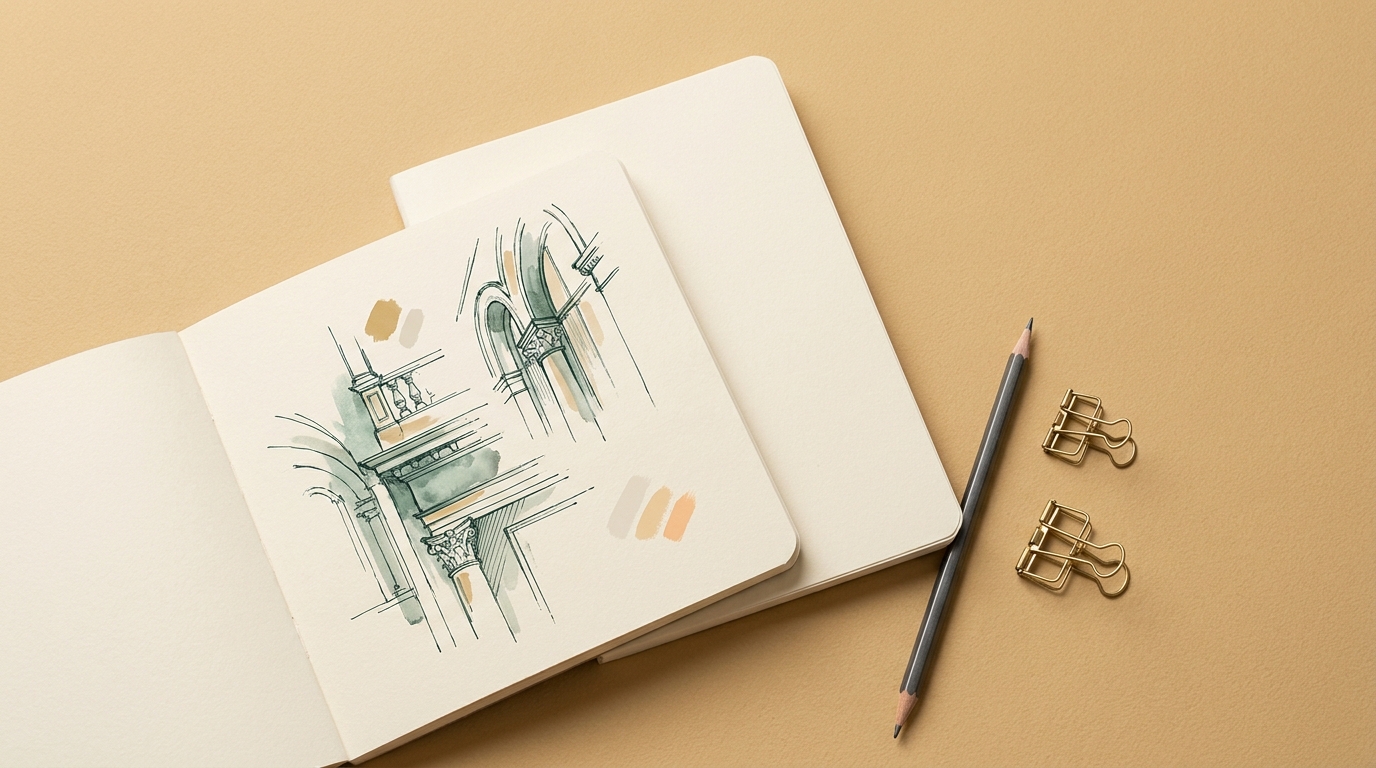
What A4 and A5 actually mean for sketchbooks
ISO sizes and the math behind A-series
When you ask how to choose a sketchbook, the first useful fact is what A4 and A5 actually measure. A4 is 210 x 297 mm and A5 is 148 x 210 mm; A5 is exactly half the area of A4, so every A5 sheet nests neatly within an A4 sheet at the same proportions ISO 216.
That halving is not a rounding convenience, it is a standard property of the A-series that designers and paper suppliers use to describe sizes consistently. Because sizes follow the same rule across the series, moving from A4 to A5 changes usable area predictably rather than arbitrarily.

Why the √2 aspect ratio matters for artists
The A-series uses an aspect ratio equal to the square root of two, which means a sheet cut in half along its larger side keeps the same proportions; this makes scaling sketches between A4 and A5 straightforward when you want to reproduce or enlarge work without cropping International paper sizes explained.
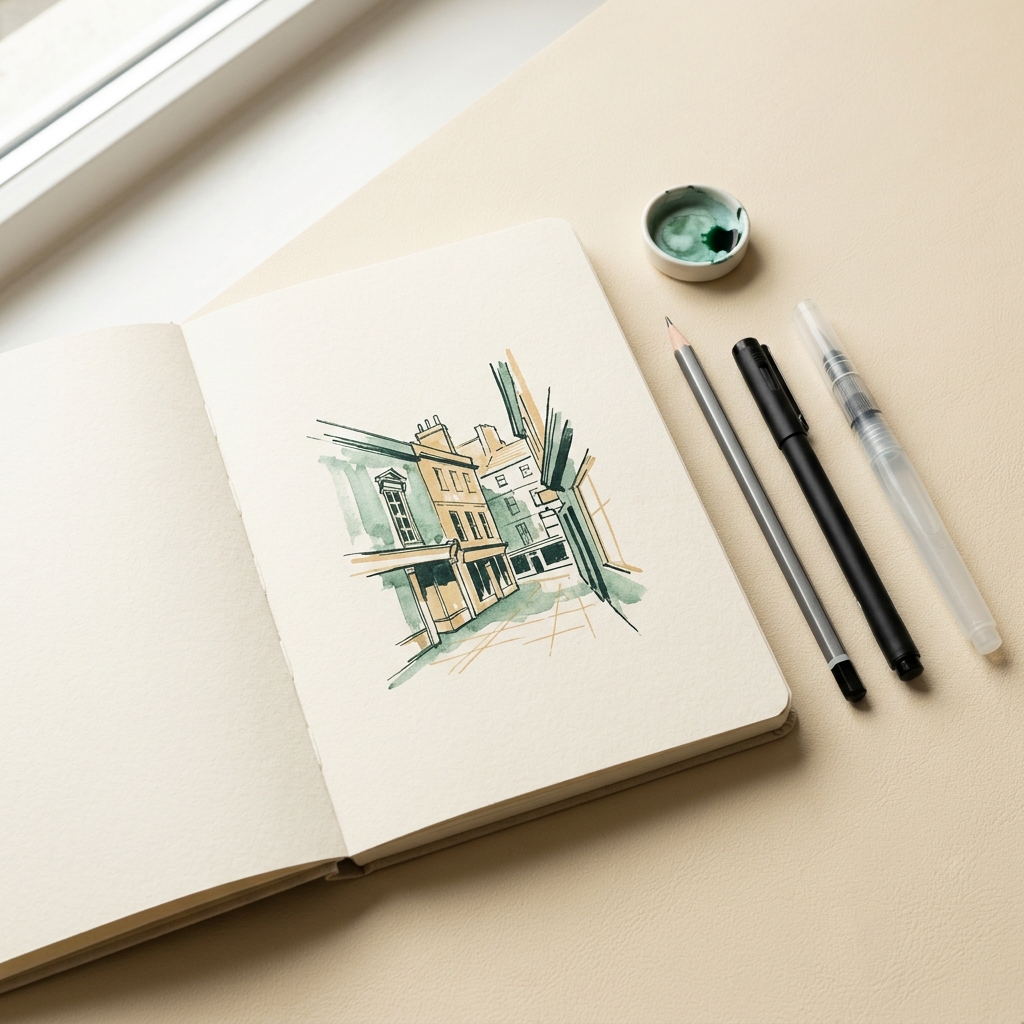
For artists the practical consequence is that a drawing composed to fit an A4 spread will scale proportionally to A5 with predictable reduction, and vice versa, which simplifies scanning, repro and working at multiple sizes.
What area and weight imply for a sketchbook
Area relates directly to sheet weight when you know the grammage. Since A0 is 1 square meter by definition, A4 equals one sixteenth of a square meter and A5 equals one thirty second. At a fixed grammage, an A4 sheet therefore weighs exactly twice an A5 sheet, which is immediately noticeable for carry weight and portability ISO 216. For more on standard tolerances see A4 paper format.
To make this concrete, a 200 g per square meter paper yields about 12.5 grams for a single A4 sheet and about 6.25 grams for a single A5 sheet, so a 60 page A5 book will be roughly half the paper weight of a 60 page A4 book when other factors are equal. That matters more than you might expect for a daily carry sketchbook.
Should I get an A4 or A5 sketchbook?
Choose A5 if portability and frequent daily use matter most; choose A4 if you need larger surface area for studio studies or to match standard A4 repro and filing workflows. Prioritize paper weight and binding to match your media before size.
A simple decision framework: how to choose a sketchbook for your needs
Start with use case: travel, studio, class or portfolio
The first step in a quick decision framework is to name your primary use case: travel sketches and quick studies, extended studio work, classroom exercises or portfolio presentation. Each use case favors a size because of handling, surface area and reproducibility; for example, travel and urban sketching tend to favor compact formats because they are easier to hold and lighter to carry.
Three step checklist to narrow size and paper choices
If your primary use is quick daily sketches on the move you will likely prefer A5 for portability. If your goal is larger compositional studies or class assignments that will be scanned or printed alongside A4 documents, A4 is often the better match. This rule is a practical heuristic rather than a limit.
Match paper weight and media to use case
After naming the use case choose a paper weight suited to your media. Light graphite and ink work very well on lower grammages, while heavier wet media require higher grammage and a textured or sized surface. The correct paper weight will usually have more impact on your satisfaction than the size alone.
When you test media, try the intended tools at the scale you plan to work. Make a short study that mirrors your typical session so you can judge whether bleed, buckling or tooth suit your technique before buying an entire book.
Binding and page-count tradeoffs
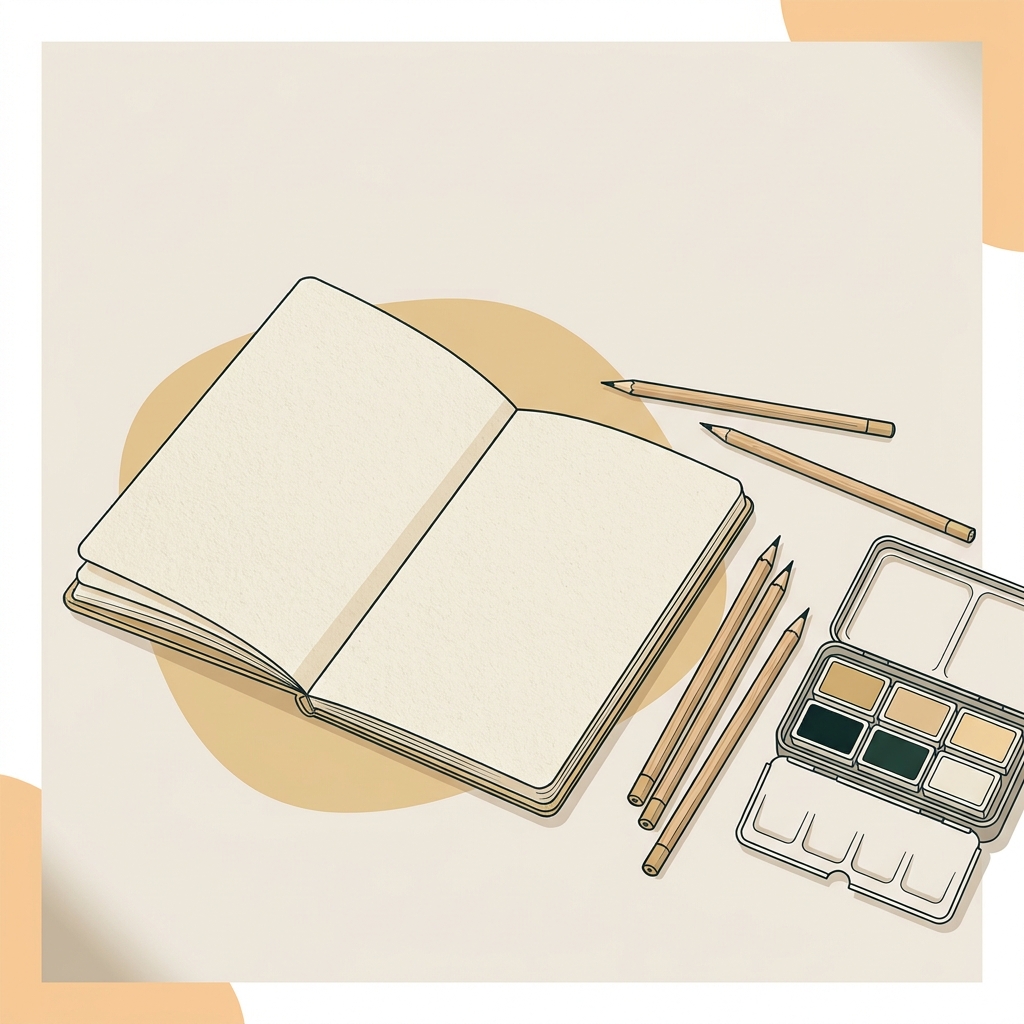
Binding type affects how flat a book opens and how comfortable the gutter is for two-page spreads. Sewn or lay-flat bindings reduce the usable loss in the gutter, while glued spines or some spiral bindings can make edge work awkward. Page count matters for total weight and for how quickly a book will fill; a high page count in A4 adds significant carry weight compared with the same page count in A5.
In short, a compact test helps: pick a single-signature or small sample in the size you think you need and try a full session of your normal practice to confirm orientation, binding behavior and paper performance before committing to a larger purchase.
Criteria to compare A4 and A5 when you shop
Portability and carry weight
When comparing models in a shop or online listing, convert sheet area and grammage into a rough carry weight estimate. Because A4 has twice the area of A5, an A4 page at the same grams per square meter will weigh twice as much as an A5 page; when multiplied by page count this quickly changes how the book feels in a bag ISO 216.
Try to imagine a typical day. If you expect long walks, public transit or travel, that doubled sheet weight is significant and favors A5. For studio use where weight is less of a concern but surface area matters, A4 is often more convenient.
Repro, scanning and filing considerations
If you plan to scan or print sketches and include them with documents, A4 integrates smoothly with common office workflows in many countries because everyday documents use that size; this can simplify scanning, printing and filing without resizing or cropping Paper size.
Conversely, if you mainly share images digitally or create personal zines, the portability benefits of A5 can outweigh the convenience of standard office sizes. Keep the intended downstream use visible while you compare specs.
Cost per sheet and availability
Larger formats commonly cost more overall and sometimes more per sheet inside the same product family, though market pricing varies by maker and retailer; compare unit price when possible rather than only the sticker price to avoid surprises The Ultimate Guide to Sketchbooks. For an internal overview of the site see site index.
When browsing, check the listed sheet size, grammage, and page count as quick filters. If a seller lists only bulk metrics, calculate or ask for per sheet weight and per sheet price to make a fair comparison across sizes.
Common mistakes and pitfalls when choosing size
Focusing on size while ignoring paper weight and media
A common mistake is choosing by size alone. Size tells you how much room you have but not how the surface behaves with your tools. Paper weight, surface sizing and tooth determine acceptance of ink, wash and erasure more than size, so check those specs first when you can How to Choose the Right Sketchbook.
To avoid disappointment, list your standard tools and match paper samples where possible. If your ink feathers on most papers, the correct weight or surface treatment beats a change in size.
Assuming bigger is always better for skill development
Bigger sketchbooks can be inspiring but they are also more likely to sit unused if they feel heavy or intimidating. Many artists develop stronger habits with a smaller, consistently used sketchbook than with a large one left at home. The choice should support practice frequency as much as ambition.
If you want to increase output, prioritize a format you will actually bring along. Often that is A5 for travel and quick daily work and A4 for studio days where more deliberate pieces are the goal.
Overlooking binding and page spread behavior
Binding affects how you use edge margins and the flatness of two-page spreads. Some bindings hide too much of the gutter or make it hard to work near the spine. When possible, open a display model or request a sample to check how a spread behaves for drawing and scanning.
Remember that a poorly chosen binding can negate the advantages of a well selected size, so include the binding test in your short evaluation protocol.
Practical scenarios: example kits and what to pack
Urban sketching kit for A5
For an A5 urban sketching kit pack a compact set that supports quick observation: one small mechanical pencil or compact wooden pencil set, an ink pen or small fountain pen, a lightweight water brush if you use washes, and a slim A5 sketchbook. The reduced paper area speeds sessions and the lower weight makes it easy to sketch while standing.
Because A5 sheets weigh half of A4 at the same grammage, an A5 kit with several small books or a filled book is noticeably lighter compared with A4, which makes carrying multiple practice sessions practical for a day out The Ultimate Guide to Sketchbooks.
Studio setup centered on A4
When your workspace is stable, an A4 sketchbook gives more room for compositional exploration, multi stage studies and larger gestures. Pair it with a portfolio sleeve or a flat surface and consider heavier grammage if you plan wet techniques. The extra surface helps with layouts that will be printed or scanned at office sizes.
A4 also works well when class assignments or reference scans are expected in A4, removing an extra resizing step in reproducible workflows International paper sizes explained.
Classroom and portfolio strategies
For classroom work, choose the size that matches assignment expectations and submission formats. If the course or institution uses A4 for hand ins, adopting A4 removes friction. For portfolio curation consider a mixture: A4 for final pieces and A5 for quick daily practice, then select a small number of A4 pieces for formal presentation.
Because the A-series scales predictably, you can work in A5 for studies and enlarge or recompose in A4 when preparing portfolio pieces without unexpected cropping or aspect ratio changes ISO 216.
A compact checklist and next steps to decide today
Two-minute checklist to pick A4 or A5
Two minute checklist, step one: name your primary use, for example travel sketches, studio studies or class work. Step two: pick the paper weight most compatible with your wettest media. Step three: decide whether you need the portability of A5 or the surface area and repro convenience of A4.
As a short rule of thumb, choose A5 for daily carry and quick visual notes, and A4 if you plan longer studio sessions or need a size that interfaces with common printing and filing systems. This approach keeps the decision tied to practice rather than preference alone.
How to test a sketchbook before buying
Buy a single-signature or a small sample in the chosen size and do a full session with your usual tools. Try both a typical page and a two page spread to check gutter behavior. If you intend to scan or reproduce, make a scan and confirm how much post processing is needed to fit your intended reproduction size.
If you cannot test physically, choose a book with a lenient return policy and low unit cost sample, or order both sizes from a seller and use one as a backup; treating this as a small experiment reduces the risk of a bad long term commitment How to Choose the Right Sketchbook.
When to switch formats
Switch format when your practice changes. If you start commuting and your sketchbook remains at home, move to a smaller portable option. If you get longer studio time and feel cramped, upgrade to a larger surface. Many artists keep both sizes for different contexts rather than forcing a single compromise.
Keep the habit in focus: if a new size improves frequency of drawing, that alone justifies the switch more reliably than hypothetical advantages of any format.
Frequently asked questions
What size is easier to carry daily?
A5 is easier to carry because it has half the area and, at the same grammage and page count, roughly half the paper weight of A4.
Will my sketches scale cleanly between A5 and A4?
Yes, the A-series uses a constant aspect ratio so sketches scale proportionally between A4 and A5 without cropping.
Should I choose paper weight or size first?
Choose paper weight to suit your media first, then select a size that supports your usual working posture and portability needs.
Choose a small test and commit to a short experiment before you buy a large stock. The right sketchbook is the one that gets used regularly; scale, paper weight and binding should serve your habit more than an idealized preference. If both sizes fit your practice, keep one for travel and one for studio work and let the context decide.
References
- https://en.wikipedia.org/wiki/ISO_216
- https://www.adobe.com/creativecloud/design/discover/paper-sizes.html
- https://www.papersizes.org/a-paper-sizes.htm
- https://www.jetpens.com/blog/Paper-Sizes-Explained/pt/836?srsltid=AU7gw4WSYC5d0iWEv1expP_9F8rhbpfCGeDqzeRMRXJS1J0x814mdVJL
- https://www.cl.cam.ac.uk/~mgk25/iso-paper.html
- https://en.wikipedia.org/wiki/Paper_size
- https://www.jacksonsart.com/blog/2020/01/27/the-ultimate-guide-to-sketchbooks/
- https://www.artistsnetwork.com/art-mediums/drawing/how-to-choose-a-sketchbook/
- https://luiswester.com/sitemap-0.xml