The journal
How do I organize a commonplace book? A practical guide
how to start a commonplace book: practical setup, a reusable entry template, and simple review routines to turn notes into durable material.
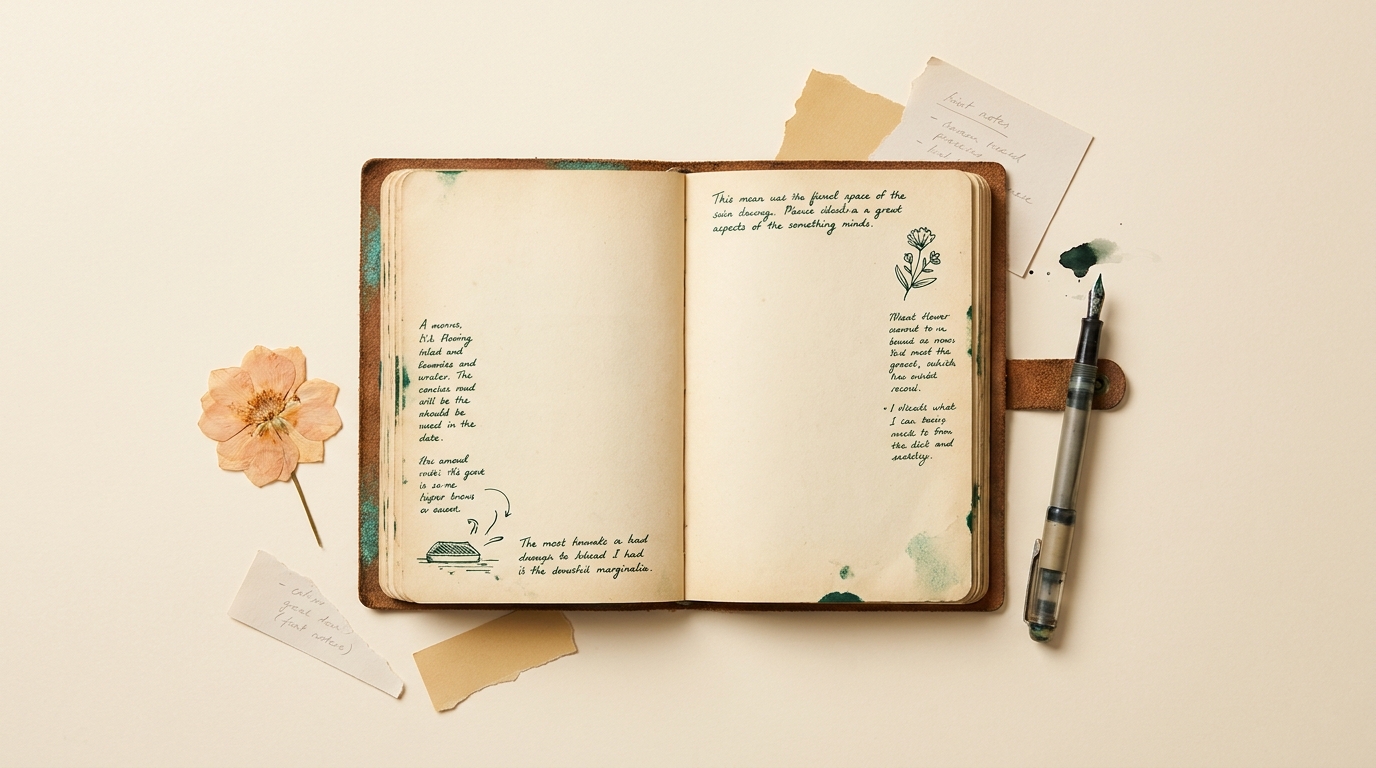
How to start a commonplace book, quick definition and what it does
If you are wondering how to start a commonplace book, think of it as a curated repository for excerpts and personal notes you intend to reuse, not a loose scrapbook of random clippings. A clear purpose and modest rules help the collection become a working tool for reading, writing, and project work rather than an abandoned pile.
Commonplace books have a long history as structured tools for readers and thinkers; they are not a modern fad but a continuity of practice that long precedes digital note apps. This long tradition is described in surveys of literary practice and shows why method matters when you want a repository that remains useful over years rather than weeks A Short History of the Commonplace Book.
Typical uses include capturing useful quotations and facts while reading, incubating ideas for projects or essays, and keeping a running personal reference of techniques, observations, or craft rules. Library and editorial guidance present commonplace books as organized collections where excerpts sit alongside concise personal commentary so later retrieval and synthesis are possible Keeping a Commonplace Book.
How do I organize a commonplace book for long-term use?
Organize it with a simple, repeatable entry template, a small set of tags or topical heads, and a lightweight review schedule so captured material becomes durable and usable.
Start by naming the primary role your commonplace book will play for you this month: reading notes, creative incubation, or a professional reference. That clear intent will guide whether you emphasize quick capture, careful indexing, or frequent synthesis.

How to start a commonplace book, choose a setup: physical, digital, or hybrid
Choosing a medium is a practical decision that affects how you process and later retrieve material. A physical notebook with division tabs encourages slower capture and reflection, while a digital app supports full-text search and rapid linking. A hybrid approach combines the learning benefits of handwriting with the findability of digital search: capture by hand, photograph or transcribe selectively, and tag or index digitally for lookup.
If your priority is deep understanding and conceptual processing, handwriting has documented advantages over verbatim laptop note-taking, because it encourages summarizing and paraphrase rather than straight transcription; that difference matters when you want the notes to become thinking tools rather than mere copies The Pen Is Mightier Than the Keyboard.
Practically, choose one of three starter paths: a simple physical kit, a digital notes setup, or a lightweight hybrid. The physical kit can be a ruled notebook, a set of index tabs, and a one-page alphabetical index at the front or back. The digital route uses a notes app that supports tags and export, and ideally allows you to add short metadata fields. The hybrid path pairs a handwritten notebook with a small digital index or photo archive that stores tags and retrieval codes.

A one-line example entry in each medium helps show the difference: in a notebook, write the source and a two-sentence reflection; in an app, paste the excerpt, add 2-3 tags and a link; in hybrid, write by hand and add a short index code that you later record in a digital tag sheet.
Starter kit suggestions that keep the barrier low: for physical use, a medium-size ruled notebook, a pen you like, and a sticky tab set; for digital, a notes app with tag support and simple export; for hybrid, a notebook plus a phone camera and a small spreadsheet or note that records cross-reference codes.
How to start a commonplace book, a simple, reusable entry template and organizational framework
A reliable entry template helps you record things the same way every time, which makes indexing and later review far easier. Use this minimal template: Source citation; short excerpt (one or two sentences); 2-4 tags; one concise reflection or application; optional cross-reference code. This template keeps the capture quick while ensuring the entry is useful later.
Example filled template (one short example): Source: Mary Oliver, "Why I Wake Early"; Excerpt: "I get up early to see what the world is about"; Tags: morning routines, attention; Reflection: Try a 20-minute early walk to test clarity at the day start; Code: MORN-01.
John Locke’s classical indexing method offers a complementary structure: organize content under topical heads, add marginal references to indicate cross-links, and maintain an alphabetical index that points to heads and pages. Translating that method into modern practice means using consistent tags or topical folders and keeping a visible index that you update regularly, which preserves findability even if you rely on full text search John Locke and the Classical Commonplace Book.
When you choose tags, keep the vocabulary short and practical: prefer tags that describe use (project, technique, quote), domain (design, history, code), and status (to review, to synthesize). Use a two-level scheme where topical heads handle broad categories and tags add fine-grained filters; this mirrors Locke’s heads plus marginal codes but works inside both a notebook and a note app.
Cross-references can be brief codes that point to other entries or to a master index. If an idea spans multiple pages or notes, add each entry’s code to the other entries as a marginal note so you can follow threads during synthesis.
How to start a commonplace book, retention: review, retrieval practice, and workflows
Capture alone does not make knowledge durable. The learning science of retrieval practice and spaced review shows that testing yourself and revisiting material on a schedule produces far better long-term retention than passive rereading; structure review into your commonplace routine so entries become reusable memory supports rather than inert clutter Improving Students Learning With Effective Learning Techniques.
Adopt a lightweight review schedule to keep the system alive: a weekly quick scan (10-20 minutes) to tag new items or move items into synthesis, a monthly synthesis session (30-60 minutes) to cluster related notes, and a quarterly index audit (30 minutes) to prune tags and update the alphabetical index. Record the date of each review on the entry or in a review log so you can spot items that never move toward synthesis.
To flag items for spaced review, add a simple status tag like "review-weekly," "review-monthly," or "synthesize." During weekly scans, briefly quiz yourself on why each flagged item matters; that act of retrieval is the learning step that secures the idea for future use.
a compact review habit tracker you can run weekly and monthly
Keep the review actions small and predictable. For example, during a weekly scan pick three items flagged for review and write a one-line note of progress; during a monthly synthesis, take five related entries and sketch a one-paragraph argument that joins them. These minimal synthesis steps create material you can later expand into essays or project briefs.
How to start a commonplace book, common mistakes and how to avoid them
One common failure is not having an index or summary page, which makes retrieval slow and discouraging. Without a simple index or a consistent tagging system, you end up relying on imperfect search or memory; an alphabetical index or visible tag list prevents that loss of access and encourages reuse Commonplace books.
Over-indexing is another frequent problem: many tiny tags or overly specific headings multiply maintenance cost and reduce the chance you will ever return to notes. Keep tags purposeful and limited in number, and merge or retire tags during quarterly audits so the tag vocabulary remains useful rather than noisy.
Leaving entries without any reflection turns the commonplace book into a clipping file. The value of a commonplace entry largely comes from the short personal note that explains why the excerpt mattered to you or how you might use it; make that reflection a required field in your template to avoid collections of orphan quotations.
Finally, relying on full-text search alone can defeat serendipity. Search surfaces exact matches but often misses conceptual connections across different vocabularies; a combination of tags, topical heads, and occasional manual cross-references recreates the browsing affordances of a well-maintained physical index and supports serendipitous discovery Keeping a Commonplace Book.
How to start a commonplace book, examples, short templates, and next steps
Concrete examples make the template easier to copy. Example 1, a reading note (handwritten style): Source: Hannah Arendt, "On Revolution"; Excerpt: "The public realm is the space of appearance"; Tags: politics, public space; Reflection: Note distinction between action and private life for current essay; Code: POL-02.
Example 2, a digital project idea (app style): Source: personal brainstorming; Excerpt: "Minimal CLI tool to export tagged notes as markdown"; Tags: tooling, project-idea; Reflection: Draft README and small prototype this weekend; Link: project/prototype/001.
Example 3, hybrid capture (handwritten plus digital index): Notebook entry: quick sketch of a process for weekly reviews; Tag in digital index: review-process; Reflection in notebook: test for 4 weeks; Digital index code: REV-01.
To turn notes into an essay or project, follow three steps: collect related entries, cluster them by theme or argument, then draft an outline that uses 4-8 of the strongest entries as evidence or scene setters. Clustering can be manual (index cards or page ranges) or digital (create a temporary tag like "synthesis-may-2026" and add entries to it).
A closing one-month starter checklist you can copy: pick a medium and set up a single notebook or app folder; create the template and capture three entries in the first week; perform one weekly scan and one monthly synthesis; create an index page and add codes for entries you expect to reuse. After four weeks, review the process and adjust tags and habit cadence based on what you actually used.

Experiment with small changes and keep the system adaptable. The goal is a durable practice that supports reading, writing, and making, not a perfect taxonomy. Try one approach for a month, and then refine the tags, index, and review rhythm based on what helped you find and reuse your entries.
Frequently asked questions
Do I need a special notebook to start a commonplace book?
No. Any notebook will do. Choose a size and ruling you can carry and write in consistently, or use a notes app with tagging if you prefer digital capture.
How often should I review entries?
Start with a weekly quick scan and a monthly synthesis. Adjust timing based on how many entries you collect and how often you reuse them.
Should I transcribe handwritten notes into digital form?
Transcribe selectively. Handwriting supports deeper processing, so only transcribe entries you expect to search or reuse often.
Start small, choose one medium, and keep the entry template simple. After a month of regular capture and brief reviews you will see whether the system helps your reading and projects. The aim is not a perfect archive but a practical habit: capture with purpose, index with modest consistency, and review on a predictable schedule.